Explainer: Why there's no end in sight for the U.S. government shutdown

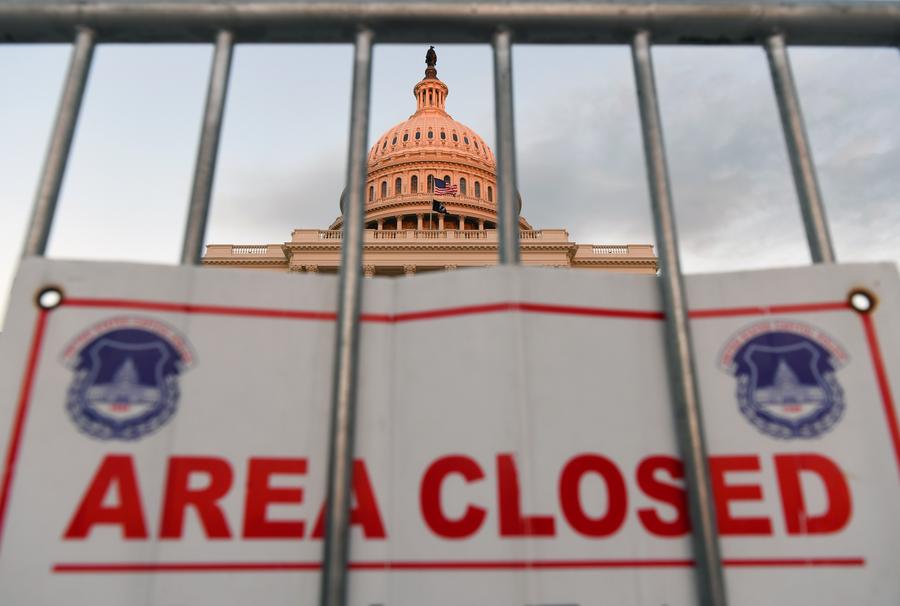
Observers believe that the prolonged federal government shutdowns stem from both parties' unwillingness to yield in a "game of chicken," as they focus on gauging public opinion and calculating their political gains.
by Xinhua writers Xiong Maoling, Yang Ling, Matthew Rusling
WASHINGTON, Nov. 5 (Xinhua) -- On Wednesday, the U.S. federal government shutdown entered its 36th day, surpassing the previous 35-day record set during the 2018-2019 shutdown, making it the longest government shutdown in U.S. history.
Over the years, as political polarization and power struggles between the Democratic and Republican parties have intensified, government shutdowns have become a recurring feature of U.S. politics, with more severe consequences.
Observers believe that the prolonged federal government shutdowns stem from both parties' unwillingness to yield in a "game of chicken," as they focus on gauging public opinion and calculating their political gains, placing partisan interests above the welfare of the people, and exposing the failures of the U.S. system.
BREAKING NEW RECORD
On Oct. 1, the U.S. Senate failed to pass a new short-term funding bill before government funds ran out, marking the first government shutdown in nearly seven years. At midday on Tuesday, the U.S. Senate again failed to advance a short-term funding bill for the 14th time.
Experts and media outlets believe this record-breaking shutdown is not only due to the deadlock between the two parties over healthcare spending, but also because both parties are using it to advance their own political agendas, showing little urgency to end it.
Since taking office early this year, President Donald Trump's administration has sought to drastically cut spending and reduce the size of the federal workforce. Many observers see the shutdown as an opportunity for the administration to pursue its goal of streamlining the government.
Director of the White House Office of Management and Budget Russell Vought estimated that the shutdown could result in the elimination of more than 10,000 federal jobs. Greg Cusack, a former member of the Iowa House of Representatives, said that over the years, Republicans have steadily railed against "the government spending too much." Under Trump and his "Make America Great Again" movement, "this long-term game plan has been pursued openly and publicly."
The Democrats' hardline stance is also one of the reasons the shutdown has dragged on. Some analysts believe that, with the three branches of power -- the White House, Congress and the Supreme Court -- all controlled by Republicans, the Democrats view the shutdown fight as an opportunity to push their policy agenda and consolidate party solidarity.
Amid the deadlock, both parties continue to trade attacks, with no clear signs of a resolution to the shutdown.
"Republicans refuse to extend the Affordable Care Act tax credits, which is going to result in tens of millions of Americans experiencing dramatically increased premiums, co-pays and deductibles," warned House Minority Leader Hakeem Jeffries, the top Democrat in the lower chamber.
U.S. House Speaker Mike Johnson, the top Republican in the chamber, said "the Schumer shutdown was never about health care or any other policy," referring to Senate Minority Leader Chuck Schumer.
"Right now, the Democrats fear political retribution from far-left activists in their party more than they fear the consequences of keeping the government closed for weeks on end," said Johnson.
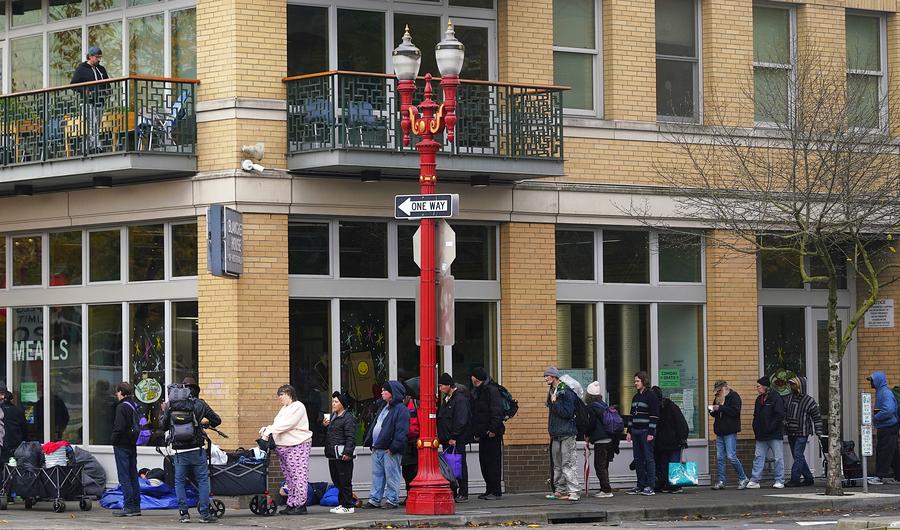
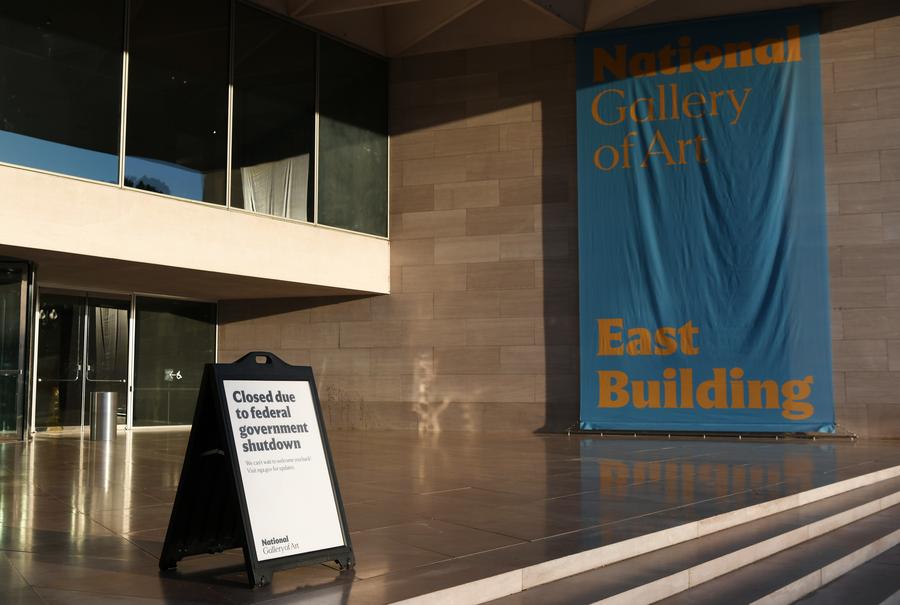
As the two parties remained locked in a war of words, the impact of the record-breaking shutdown continued to spread, dealing a heavy blow to multiple areas affecting people's daily lives, including aviation safety and food assistance programs.
Transportation Secretary Sean Duffy warned on Tuesday that the ongoing government shutdown has increased risks to air travel, cautioning that widespread flight cancellations -- and even potential airspace closures -- could occur if air traffic controllers go without a second full paycheck next week.
Data from the U.S. flight-tracking website FlightAware show that thousands of flights nationwide are experiencing delays each day.
The U.S. Congressional Budget Office recently warned that the annualized growth rate of U.S. real GDP in the fourth quarter could decline by 1 to 2 percentage points, depending on the duration of the shutdown. If the shutdown lasts six weeks, economic losses would rise to 11 billion U.S. dollars; if it continues for eight weeks, losses would reach 14 billion dollars.
HISTORY OF SHUTDOWNS
In recent years, government shutdowns have evolved into a recurring feature of U.S. politics. Both parties attack each other to gain political advantage, and partisan polarization has intensified.
According to U.S. media reports, the first partial federal government shutdown in U.S. history occurred in 1976, when President Gerald Ford vetoed a spending bill amid a budget dispute at the Department of Health, Education and Welfare, which no longer exists under that name.
Prior to 1980, federal agencies generally continued to operate during funding gaps, while minimizing all nonessential work and expenditures. However, in 1980, then-Attorney General Benjamin Civiletti under President Jimmy Carter clarified that federal agencies could not spend funds without appropriations. This decision led to larger-scale government shutdowns in subsequent years.
According to statistics from the U.S. Congress, there have been 15 federal government shutdowns in the United States since 1980. Eight occurred during the 1980s, most lasting only one to three days; three occurred in the 1990s, with the longest lasting 21 days; and four have occurred since 2013.
Although the number of shutdowns in recent years has been low, the country has faced multiple high-risk shutdown crises in a single year.
From late 1995 to early 1996, the 21-day shutdown during the Clinton administration was the longest in U.S. history at the time. The Republicans demanded deep cuts in government spending, and the Democrats insisted on preserving certain social welfare and healthcare expenditures, resulting in the standoff.
In October 2013, under President Barack Obama, the government shut down for 16 days after Republicans sought to reduce or delay funding for the Affordable Care Act, also known as Obamacare.
During Trump's first term, from late 2018 to early 2019, a deadlock over funding for the U.S.-Mexico border wall led to a shutdown that at the time set a record, lasting 35 days.
Experts noted that recent shutdowns are increasingly politicized, highlighting the deepening divisions between the two parties.
Duke University's political science professor David Rohde previously noted that early government shutdowns tended to revolve around basically bargaining over routine government activities, and "there was a lot less political heat."
Douglas W. Elmendorf, former Harvard Kennedy School dean and former director of the U.S. Congressional Budget Office, said there has been a recent increase in shutdowns due to a lack of appetite for compromise. "The increasing polarization that we see has increased the likelihood of shutdowns and the length of shutdowns," he said.
ROOT CAUSES OF SHUTDOWNS
During this month-long government shutdown, both the Democratic and Republican parties have shown little interest in active negotiation or compromise. Instead, they have focused on partisan battles and blame-shifting, disregarding the immediate interests of the public and trying to convince their own voters that the other side is responsible for the shutdown. But in the eyes of the American people, neither party can escape blame.
According to a recent ABC News/Washington Post/Ipsos poll, 68 percent of Americans said the Democratic Party is out of touch with the concerns of most citizens, while 61 percent said the same about the Republican Party.
A recent Gallup poll showed that public approval of Congress has dropped to 15 percent, with nearly 80 percent of U.S. adults disapproving of its performance.
"The polling I've seen suggests that nobody is happy with the shutdown or with either party," Christopher Galdieri, a political science professor at Saint Anselm College in the northeastern state of New Hampshire, told Xinhua.
Reed Galen, co-founder of the American political organization The Lincoln Project, said the United States "does not face the specter of a government shutdown every September because of policy disagreements or financial constraints, but because democratic accountability has been so eroded that elected officials have no incentive to compromise -- to do the hard work of politics -- and devise real solutions."
Some analysts said the federal government shutdown has seriously damaged America's national credibility.
Jason Furman, who served as chair of the White House Council of Economic Advisers under the Obama administration, noted that the shutdown is emblematic of a larger trend of weakening domestic and international confidence in the U.S. government and financial systems.
Brookings Institution Senior Fellow Darrell West is also concerned about the larger picture. "The shutdown weakens global opinion towards the United States and makes it look like our leaders are incompetent. Other nations will argue America does not know how to govern itself," West told Xinhua. ■











Comments