




* New icons of Chinese pop-culture and trend-setting-phenomena are gaining traction worldwide, such as TikTok, science fiction and fantasy novels.
* TikTok, developed by Chinese tech company ByteDance for markets outside of China, was the fourth most-downloaded non-game app for 2018 worldwide, following WhatsApp, Messenger and Facebook.
* Award-winning novelist Liu Cixin's "The Three-Body Trilogy" and other Chinese science fiction have grown in popularity both at home and abroad.
* In a Twitter poll on why Chinese novels have become popular, nearly 30 percent of the 3,000 participants said the cultural elements attract them the most.
by Xinhua writers Peng Tianxiao, Shuai Anning and Liang Junqian
BEIJING, July 28 (Xinhua) -- Besides the traditional Kung Fu, Peking Opera and books by ancient sages, several freshly minted icons of Chinese pop-culture and trend-setting-phenomena are also gaining traction worldwide.
They are changing the way China is seen by the world, as well as the way today's young people see and present themselves to the world.
According to a recent survey with a sampling of over 6,000 people, TikTok, a social media video app, Chinese sci-fi works and Wuxia (or fiction) novels, among others, have been trending globally.
TIKTOK SWEEPS SOCIAL MEDIA
Twenty-two-year-old Noor Afshan thought she would never have the chance to achieve fame or fortune after failing to qualify as a contestant in local reality shows several years ago.
Just for fun, the young Indian woman began posting videos of herself performing traditional Indian dances on TikTok, a China-developed app launched in 2017 that allows users to create and share talent videos which are no longer than 15 seconds.
She keeps posting everyday, and is now the idol of 3.3 million. She even makes around 50,000 Indian rupees (around 700 U.S. dollars) a month by advertising for brands on the platform. The national average income per capita in India is 2,100 U.S. dollars per year.
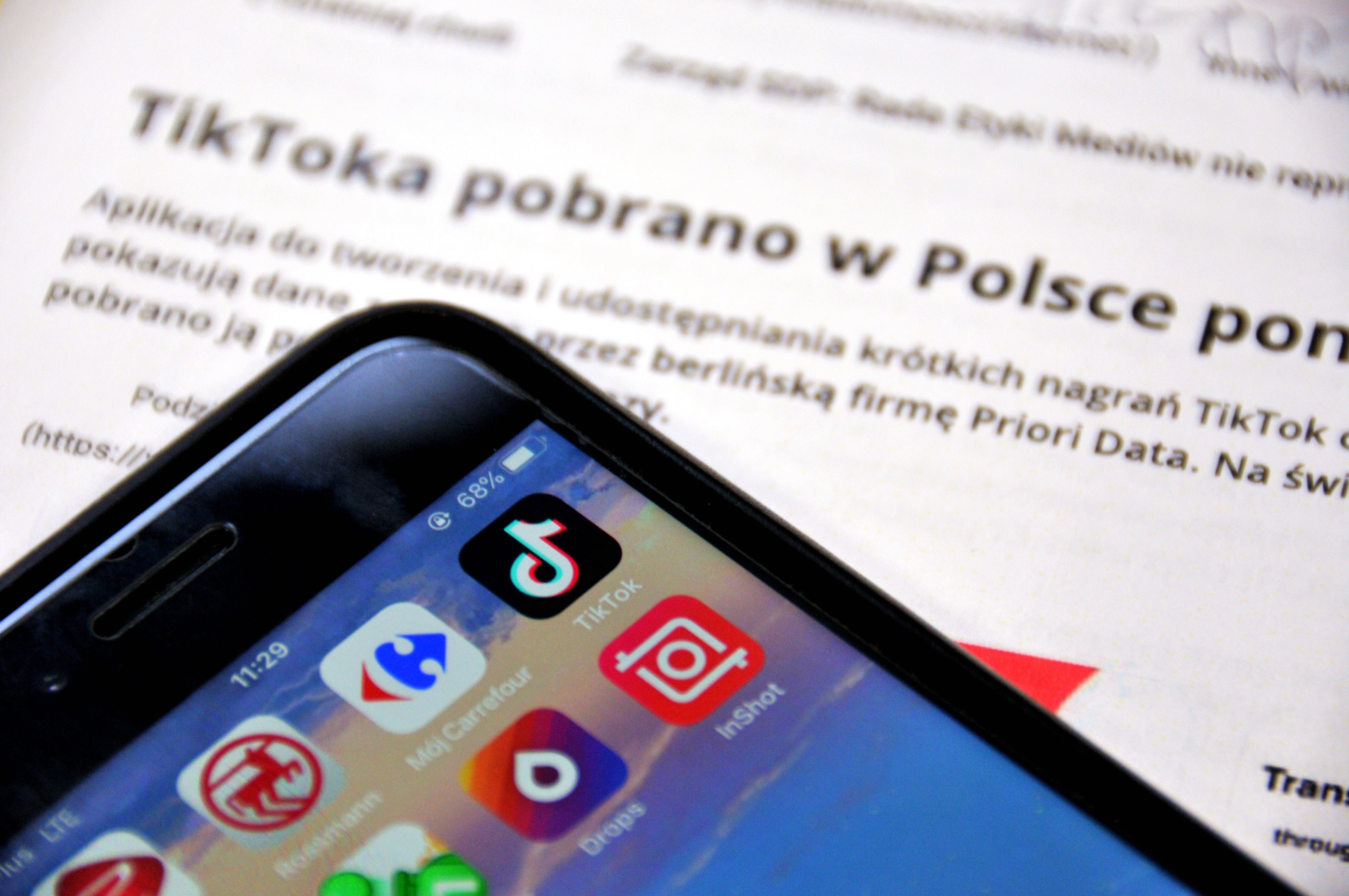
Photo taken on Feb. 13, 2019 shows the Tiktok app icon (upper right corner) on a smartphone screen. (Xinhua/Shi Zhongyu)
TikTok, Afshan said, has offered ordinary people a place to show their creativity and connect with others regardless of their caste and religion. "It gives people a sense of identity and unity," she said.
TikTok was developed by ByteDance, a Chinese Internet tech company, for markets outside of China. After WhatsApp, Messenger and Facebook, it was the fourth most-downloaded non-game app for 2018 worldwide. The number of downloads for TikTok hit 1 billion globally in February 2019, according to app analytics site Sensor Tower.
People aged under 30 account for the majority of TikTok's users. Extremely simple and user-friendly services have contributed to the app's explosive growth.
"It is a new way to express ourselves, to make people know more about us," said Panupong Ketlekwat, a 21-year-old college student in Thailand who earned over 20,000 followers on TikTok by lip-syncing popular video clips.
He said the app helps him demonstrate his personality and lifestyle as everyone can access the short videos he uploads.
Sona Rai shared the same view. "My favorite aspect of TikTok culture is how it enables the creation of video memes, and how it's a fairly low barrier to join in and create your own," she said in a comment on Quartz, a business news website targeting high-earning readers and readers via mobile devices.
"I realize it (TikTok) is powered by AI but it feels delightfully human," said Rai.
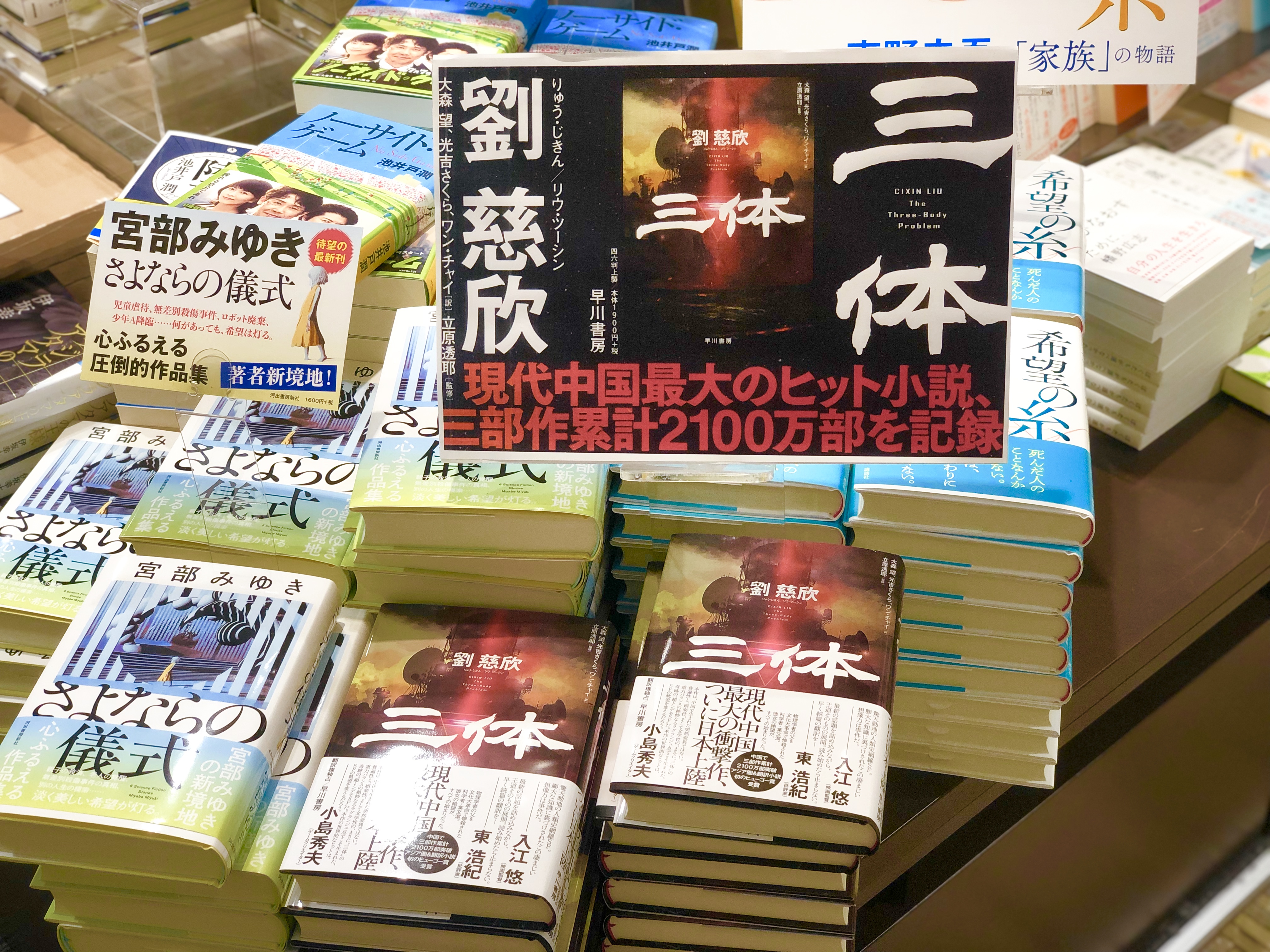
Chinese science fiction "The Three-Body Problem", one of "The Three-Body Trilogy", is on sale at Yurindo bookstore in Meguro of Tokyo, Japan, July 15, 2019. (Xinhua/Guo Wei)
CHINESE SCI-FI WOWS FANS, CRITICS
Thanks to blockbuster books like Hugo-Award-winning novelist Liu Cixin's "The Three-Body Trilogy," Chinese science fiction has grown in popularity both at home and abroad and across all ages in recent years.
When the book was launched in Japan this month, "The Three-Body Problem," the first part of Liu's trilogy, reached the top of the Amazon chart of bestselling literary fiction in the country.
Within a week, Hayakawa Publishing Corporation, the publisher of the book, has ordered a tenth reprint, bringing the number of printed copies to a total of 86,000.
"I bought the Japanese version as soon as it was published. I started to read after work at six o'clock and I finished reading the whole book at 12 o'clock at night. It's really wonderful," said Japanese reader Daichi Nakashima excitedly.
Nakashima, 27, said he was impressed by the "distinctive Chinese cultural characteristics" and "scientific details" of the book.
"In terms of theme, it is quite different from European, American and Japanese science fiction ... It's not about intuition or destiny. It's about humans' hard work and rational thinking that opens up the future," he said.
"Most of the readers are in their 30s, (but) there are also younger readers ... Sci-fi readers aged 50 to 60 also buy it," Nozomi Omori, the Japanese translator of the book, told Xinhua.
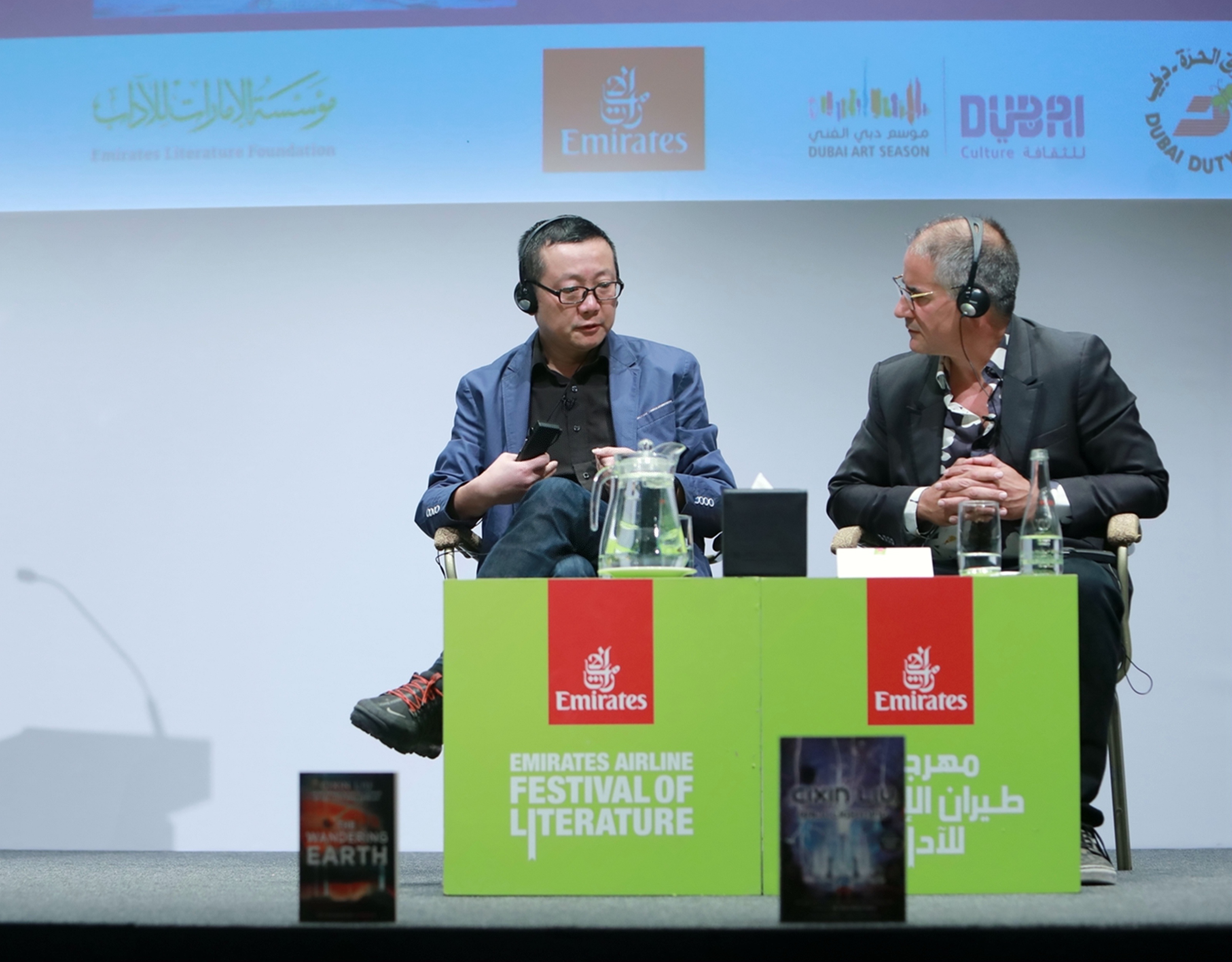
Chinese sci-fi writer Liu Cixin (L) speaks during a meeting with his readers at the Emirates Airline Festival of Literature in Dubai, the United Arab Emirates (UAE), on March 8, 2019. (Xinhua)
Liu Cixin is also the author of the global hit movie, "The Wandering Earth", which grossed over 700,822,057 U.S. dollars worldwide. In comparison, Star Wars IV (A new Hope) grossed 786,598,007 dollars.
Several other Chinese sci-fi writers have also become well-known. Chen Qiufan's debut sci-fi novel "The Waste Tide" is set to be published in Japan later this year. "In the future, Chinese sci-fi will become a genre that will be remembered by science fiction fans," said Omori, who is also a critic and anthologist.
"This is the golden age (of Chinese sci-fi)," said Japanese writer and scholar Toya Tachihara.
Chinese sci-fi "has the latest scientific knowledge and unique Chinese culture and history, which help produce a unique kind of science fiction that no other country has," Tachihara said.
CHINESE NOVELS CHARM READERS
At first glance, Chinese Wuxia novels may be hard to understand for foreign readers due to the genre's complicated cultural background and connotations. But more and more fans have been devoting themselves to the translation of these books, as well as the promotion of Chinese culture.
Wuxiaworld.com is a magnet for Chinese Wuxia novel fans. Founded by Lai Jingping, a Chinese American, the online community has attracted dozens of novel translators and thousands of readers.
"Wuxiaworld starts like a fan website, and is proof of the concept that Chinese culture, if done properly, has the chance to be spread to Western markets," said Lai, better known as RWX, his pseudonym.
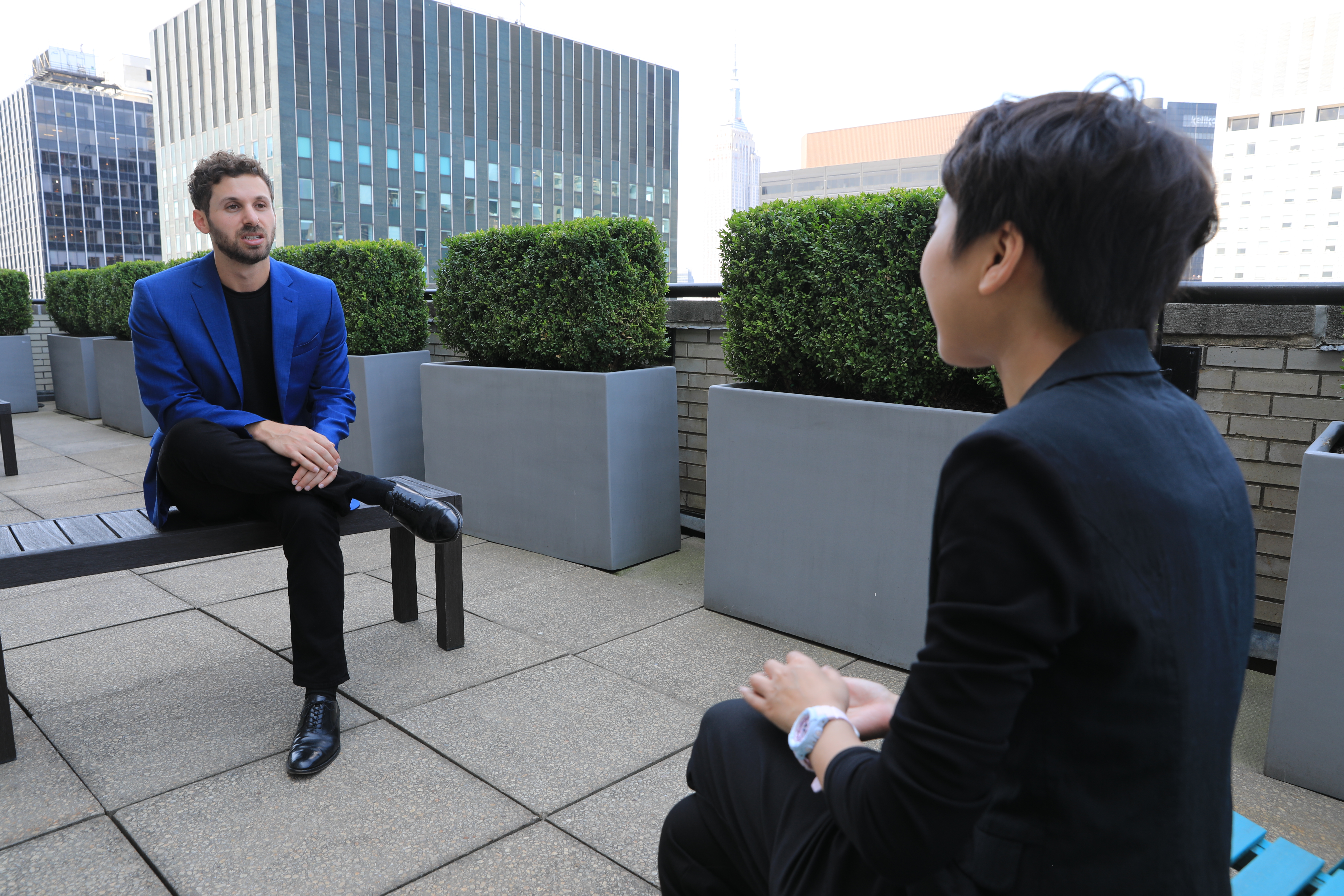
Zak Dychtwald receives an interview with Xinhua in midtown Manhattan of New York, the United States, July 26, 2019. (Xinhua/Zhang Mocheng)
"I think it (Chinese fantasy novels) offers a different point of view," said Zak Dychtwald, an author from the U.S. state of California who has been engaged in China-U.S. cultural and people-to-people exchanges for years. He offered several examples of how Chinese fantasy novels offer a different perspective.
"There are different ideas of what it means to be a hero. There are different ideas of what it means to be family-oriented ... different ideas of what it means to be masculine or feminine," said Dychtwald.
Those Chinese versions of that as offered in Chinese fantasy novels are really fascinating for the young generation, who for the most part have only come into contact with Western versions of such ideas, Dychtwald said. What's more, the Chinese versions can diversify readers' understanding of the world, he added.
In a Twitter poll on why Chinese novels have become popular, nearly 30 percent of the 3,000 participants said that the cultural elements attract them the most.
Many people further commented that Chinese fantasy novels, to some extent, help spread traditional Chinese philosophies like Taoism, which emphasizes harmony and balance in life.
Nearly half of the participants said they identified with such values as justice as they are presented within the works, while around 22 percent said they enjoyed indulging themselves in the alternative reality created by the authors.
(Xinhua reporters Ye Shan, Guo Wei and Liang Saiyu in Tokyo, Yang Zhou and Guo Xinhui in Bangkok, Jiang Lei and Rati Agnihotri in New Delhi, Pan Lijun and Zhang Mocheng in New York, and Zhu Xiao and Wu Xinsheng in Nanjing contributed to the story.)
(Video reporters: Ashim Bhattacharya, Thana Nuntavoranut, Guo Wei, Wu Xinsheng, Zhang Mocheng; Video editors: Li Guangzheng, Sui Lixi)
